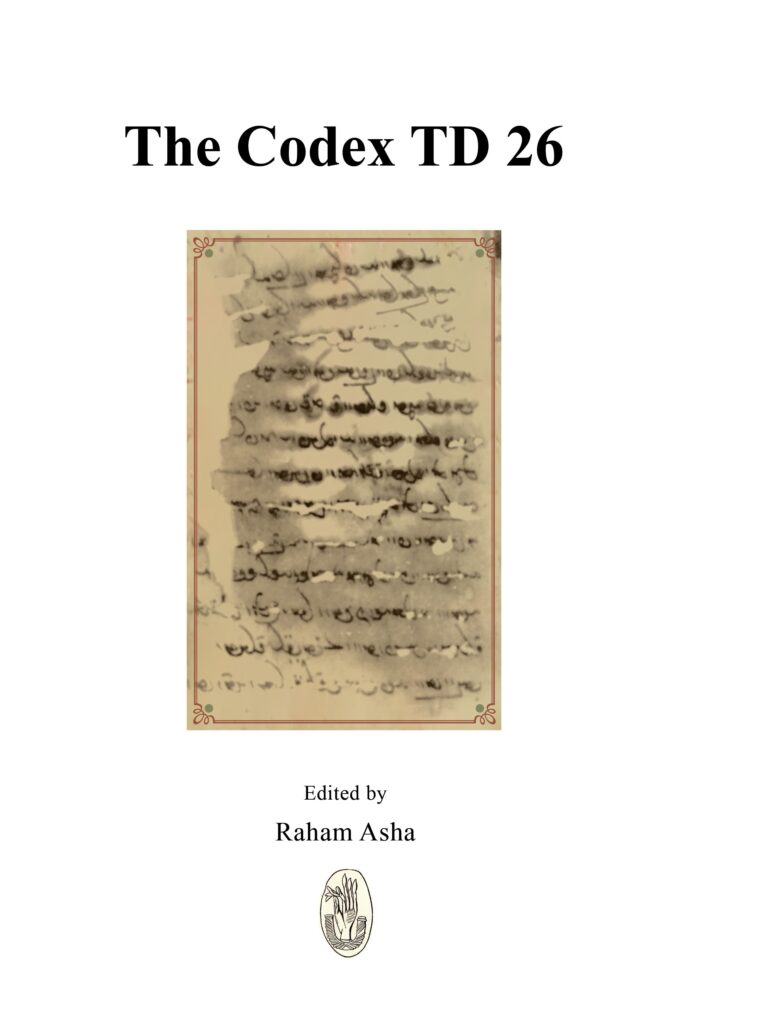

ŠGV: šak-ud-gumānīh-vizār | The Doubt-removing book
Raham Asha
The Text has been scrupulously edited, commented and translated by Raham Asha over decades. We here use the last version of his work, published in 2015, with some minor modifications: šak-ud-gumānīh-vizār: The Doubt-removing book of Mardānfarrokh, Introduced, translated, and edited by Raham Asha, Paris, Alain Mole, 2015.
pārsīg
ped-bun
I
(1-2) nam Ohrmazd xvadāy ī mahist ud dānāg, [vispxvadāy, vispāgāh ud visptuvān, kē andar-z mēnōgān mēnōg.
.
(3) u-š, az xvadīh –ped ēkīh ōstīgān– āfrīd.
(4) u-š dād, ped xvēš anhambidīg zōr, abardar šaš amehrspend,] ud vispān yazdān ī mēnōgān gētīgān;
(5) ud haft gētīg daxšagān ī hend: mardōm, gōspend, ātaš, ayōxšust, zamīg, āb ud urvar.
(6) u-š dād mardōm ped sālārīh ī dāmān, ō kāmravāgīh.
(7) u-š frēstīd, āvām āvām, dēndānāgīh ī abēzagīh ud gumēzagīh, cihrīgīh ud kāmīgīh.
(8-9) ēdōn-z vīr, uš, xrad ud dānišn, bōy, fravahr, ī hend ruvān abzārān; ī hend āgāhīh-xvāstār ī ēn abzārān ī mēnōg panz, ī hend vēnišn, ašnavišn, hambōyišn, caxšišn, permāhišn, ped panz abzārān ī gētīg, ī hend cašm, gōš, vēnīg, dahan, dast, hamāg tan mārdārān.
.
(10) u-š, ped ēn abzārān abāgīh, mardōm dād ō rāyēnīdārīh ī dāmān.
(11-12) u-š dād dēn ī harvispāgāhīh ī mazdesn draxt humānāg, kē-š ēk stūnag, do baxšišn, sē azg, cahār sāg, panz rēšag.
(13) u-š ēk stūnag peymān;
(14) do baxšišn kunišn ud pahrēzišn;
(15) sē azg humat, hūxt ud huvaršt, ī ast humenišnīh, hugōbišnīh ud hukunišnīh;
(16-17) cahār sāg, cahār pēšagān ī dēn kē-š gēhān pediš virāyīhed, ī ast āsrōnīh, arsēštārīh, vāstryōšīh ud hudoxšīh;
(18) panz rēšag, panz pedān ī-šān dēnīg nām: mānbed, vīsped, zandbed, dahebed, zarduštrōdum.
(19) ud ēk sarān sar, ī ast šāhān šāh dahebed ī gēhān.
(20) u-š andar gēhān ī kōdak, pēdāgēnīd ped humānāgīh ī ēn cahār pēšagān ī gēhān:
(21) cōn abar sar āsrōnīh,
(22) abar dast arsēštārīh,
(23) abar eškamb vāstryōšīh,
(24) abar pāy hudoxšīh.
(25) ēdōn-z cahārān hunarān ī andar mardōm, ī ast xēm, hunar, xrad, toxšāgīh:
(26) abar xēm āsrōnīh, cōn mahist xvēškārīh ī āsrōnān xēm, ī šarm ud bīm rāy, vināh nē kunend.
(27) abar hunar arsēštārīh, ī ast vāspuhragāndar peyrāyišn ī arsēštārān hunar, ī vizārīhed «narīh ī az xvadīh».
(28) abar vāstryōšān xrad, ī ast xradīkkārīh varzīdan ī gēhān ud peyvastan ī ō frašegird.
(29) abar hudoxšān toxšāgīh, ī ast mahist ravāgēnīdārīh ī-šān pēšag.
(30) ēn harv ēvēnag vinārišn abar ēk stūnag, rāstīh ud peymān, pedīrag druz, u-š abzārān ī hambidīg hend.
(31-32) ēn ī-m ušmurd vasēvēnagīhā, vassardagīhā, cōn vasdēnīh, vasvurravišnīh ī andar āvām kē hamāg ēk abāg did hambasān, hambidīg, škastār ud kastār hend, abāg hambasānīh ud škastārīh ud zadārīh ī-šān ēk ō did, pas-iz ēvkirdagīhā, ped ēvzōrīh, pedīrag ēk rāstīh stēzend.
(33) rāstīh xvadīh ēk zōr, ī ōstīgān ped ēkīh, ī rāstīh.
(34) drōv vasēvēnag, ō vas brahm hambasān šāyist būdan hamāgīh az ēk bun ī drōzanīh ast.
(35) hān man ī Mardānfarrox ī Ohrmazddādān ham, ēn pesāzišn kird. cōn man dīd andar āvām vassardagīh vasdēnīh, vasuskārišnīh ī kēšān.
(36) ā-m andar ham aburnāy-dādīh hamvār taftīgmenišnīhā xvāstār, vizustār ī rāstīh būd ham.
(37) im cim rāy ō-z vas kišvar ud zrehvimand franaft ham.
(38) u-m ēn hangirdīg gōbišnān ī aziš ast pursišn ī rāstīhkāmagān, u-š az nibēg ud āyādgār ī pēšēnīg dānāgān rāstān dastvarān, ud nāmcišt hān ī hufravard Ādarpādyāvandān, cīd ud vizīd, ud ō ēn āyādgār «šak-ud-gumānīh-vizār» nām nihād.
.
.
(39) cōn ped gumānvizārīh ī nōghamōzagān abēr abāyišnīg ast abar bē dānistan ī rāstīh, ud vābarīgānīh ud rāstīh ī veh dēn, ud andarg škōh judpehikārān.
(40-41) u-m nē dānāgān ud abzārumandān, bē frahangīgān ud nōgabzārān rāy kird ud ārāst; kū dā vasān abar abdīh ud vābarīgānīh ī veh dēn ī pōryōdkēšīg gōbišn abēgumāndar bēnd.
(42-43) az-iz vizīdag dānāgān xvāhišnīg ham kū, kē nigerīdan xvāhed, mā ō nihangmāyagīh ī guftār ud pesāxtār, bē ō vazurgīh ud rāstīh ud vābarīgānīh ud vimandgōbišnīh ī pēšēnīg dānāgān ē nigered.
(44) cē an kē pesāxtār ham, nē pāyag ī hamōzgārīh, bē hān ī hamōzišnīgīh dāram.
(45) u-m rādmenišnīhā gōbišn az hān ī dēndānišnīh ō-z nōghamōzagān baxtan cimīg sahist.
(46) cē kē az andak dānišn ī-š ast ō arzānīgān baxšed, pedīrišnīgdar kū, kē vas dāned, (bē) arzānīgān aziš asūdīh ud anayyārīh.
(47) cōn avēšān vizīrēnīd pēšēnīg dānāgān
(48) kū rādīh sē ēvēnag: menišnīg, gōbišnīg ud kunišnīg.
(49) menišnīg rādīh hān kē kadār-z-ē hamgōhrān rāy nēkīh abāyistan ōn cōn xvēš rāy.
(50) rādīh ī ped gōbišn hān kē az harv frārōn dānišn ud āgāhīh ī-š mad ēsted ō arzānīgān hamōzed.
(51-52) cōn hān ī dānāg-ē guft kū: «kāmam kū, dānam vispāgāhīh ī sūdbar, ud hamōzam ō frayādān, ud ayābam bar ī abāyišnīg.»
(53) rādīh ī ped kunišn hān kē az nēkīh ī-š mad ēsted kadār-z-ē ō arzānīgān nēkīh.
(54-55) didīgar, āyādēnīdārīh ī vehān ped bōxtruvānīh. im cim rāy, man ārāst kū-m dā dānāgān ped xvēš xvābarīh ud hucašmnigerišnīh, ped anōšervānīh āyādēned.
.
.
.
(56) cē guft ēsted kū: kē visp dām ī veh, hucašmīhā, nigered, cašm ī ōy cašm ī xvaršēd ast.
(57) cē xvaršēd ō visp dām, hucašmīhā, nigerīdār ud brāzēnīdār.
English
Prelude
I
(1-2) Homage to Ahura Mazdā, the lord, the most great and wise, universal sovereign, omniscient and omnipotent, Who is the <holy> spirit among the spirits.
(3) From His selfhood (or, essence) that is One, steadfast in [His] unity, He spiritually created.
(4) And, through His unrivalled power, He created the six supreme Amǝṣa spǝṇta (holy Immortals), and all the Yazata of the world of thought and of the world of life,
(5) and the seven material signs (or, creations), namely the (primordial) Man, Holy Cow, Fire, Metal, Earth, Water and Plant.
(6) He created man as master of the creatures in fulfilment of His will.
(7) He likewise sent, age after age, through his beneficence and mercifulness, to His creatures the Scientia divina of purity and mixture, naturalness and willingness;
(8-9) and likewise the wit, intelligence, wisdom and knowledge, consciousness and fravahr-soul which are the organs of the soul that are seeking information of these five immaterial organs –i.e., sight, hearing, smell, taste and touch– by the five material organs –i.e., eye, ear, nose, mouth and hand–, the whole bodily senses.
(10) And [simultaneously] together with these organs, He created man for the guidance of the creatures.
(11-12) He created the Mazdayasnian religion of omniscience like a tree, with one trunk, two boughs, three branches, four stems and five roots.
(13) The one trunk is measure;
(14) the two boughs are action and protection;
(15) the three branches are humata, hūxta, huvaršta, that is, good thought, good word, and good deed;
(16-17) the four stems are the four classes of the Religion by which the world is well-ordered, that is, priesthood, warriorship, husbandry and artisanship;
(18) the five roots are the five lords whose scriptural names are house-lord, village-lord, district-lord, country-lord and pontiff.
(19) And [there is] one master of masters, that is, the king of kings, the lord of this world.
(20) He made manifest the microcosm that is man in the likeness of these four classes of the world:
(21) The head corresponds to priesthood;
(22) The hand to warriorship;
(23) The belly to husbandry;
(24) And the feet to artisanship.
(25) So too the four virtues (/qualities) that are in man i.e. temper (or, character), skill, wisdom and diligence:
(26) Priesthood corresponds to temper, for temper is the most proper function of the priests, that they do not commit sin on account of shame and fear.
(27) Warriorship corresponds to skill, for the most proper embellishment of the warriors is skill which is explained “manliness by itself”.
(28) Husbandry corresponds to wisdom, for the wise action is the cultivation of the world and the linking with the eschatological renovation [of the existence].
(29) Artisanship corresponds to diligence, for diligence is the greatest propagation of their class.
(30) All these diverse establishments are upon one trunk, truth-and-measure, opposed to its rival, lie and its organs.
(31-32) I noticed this, multifariously and of many kinds, that many religions and beliefs in the world that all are discordant, rival, breaker and enemy one as regards the other, in spite of their discord, breaking and hostility to one another, they combat however, in alliance and with united force, against the sole truth.
(33) The essence of truth is one force, steadfast in unity, which is Truth.
(34) The lie is manifold, which may be in numerous adverse forms, but all these are from one base, that is Lie.
(35) I, who am Mardānfarrox son of Ohrmazddād, provided this composition. For, I observed in the world (in this period), numerous kinds and many religious views and many discussions of the sects.
(36) From childhood on I have always been fervent-heartedly a suitor and researcher of truth.
(37)That is why I have travelled in many lands and seashores.
(38) And I have collected and selected these summarised discourses, some of which are questions of those who seek after the truth and some are from the writings and memoranda of the ancient sages, true priests, especially those of the blessed “Ādarpādyāvandān”, And I have appointed to this memorandum the title Šak-ud-gumānīh-vizār, “Doubt -and-doubtfulness-removing”;
(39) Because it is verily requisite for removing the doubts of neophytes about the knowledge of the truth and the trustworthiness and truthfulness of the good religion, in contrast with the miserable opponents.
(40-41) I have composed and arranged it not for the wise and expert, but for the students and novices, so that many of them may acquire more certainty regarding the wonder and the trustworthiness of the good religion and the discourses of the old teaching.
(42-43) As regards distinguished sages, I ask of those wishing to consider it, not to consider the little knowledge of the narrator and composer, but the greatness, the truthfulness, and the trustworthiness of the logical discourses of ancient sages.
(44) For I, who am the composer, belong not to the rank of the teachers, but to the rank of the students.
(45) And it seemed to me justified to bestow, liberal-heartedly, a theological treatise on neophytes.
(46) Because he who bestows the little knowledge that he has on those who are worthy is more acceptable than he who knows much, but from whom those who are worthy do not receive benefit or help.
(47) The previous sages stated that:
(48) Liberality is of three kinds, of thought, of word and of deed.
(49) Liberality of thought: to desire good for whoever is alike, just like for him.
(50) Liberality of word: to teach to those who are worthy all the righteous knowledge and information acquainted by him.
(51-52) As a certain sage said that: “I want to acquaint all advantageous knowledge and teach it to those who help (the other), and acquire a desirable profit”.
(53) Liberality of deed: [to bestow] the good that he has acquired something on those who are worthy.
(54-55) Furthermore, [I have composed it, so that] those who are good may remember me, saying “may his soul be saved”. For this reason, I have arranged it, so that the sages, through their beneficence and kind observation may remember me, saying “may his soul be immortal (and happy)”.
(56) Since it is said that: “He who observes all the good creature with good eyes, his eye is [like] the eye of the sun”.
(57) For the sun, indeed, observes and illuminates all creatures with a benevolent eye.
.
darag ī fradum
II
(1) darag ī fradum:
(2) abar pursišn ēcand ī hamēpērōzgar, Mihrayyār ī Muḥammadān, az Spāhān, vehmenišnīhā, nē halagxvāhišnīhā pursīd, pāsox:
(3) hān ī pursīd kū: «Ahrmen cē rāy ō rōšnīh vizāyed, ud cōn šāyist būd ka-š nē hamgōhr, ka amā hamē vēnem kū harv cē nē hamgōhr, az judgōhr ōn pahrēzed cōn āb az ātaš?»
(4) pāsox ēn kū: Ahrmen vizāyišn ī-š ō rōšnīh xvad vahān judgōhrīh;
(5) ud zadārkāmagīh ī-š hamēšagīhā ped gōhr būdan rāy ō judgōhr-š zadār.
(6) vizūdagīh, vizāyišn harv cōn baved bē az judgōhrīh ud judgōhrān enyā nē baved.
(7) cē hamgōhrān, ēk ō did, hamkāmagīh ud hamsāzagīh baved, nē vizāyišn ud vizūdagīh.
(8) ud judgōhrān, hamēstārgōhrīh rāy, harv cōn ō ham rasend, ēk ō did zadār ud vizūdār bend.
(9) hamgōhrān, hamsāzagīh ud hamgōhrīh rāy, ka ō ham rasend zīvīhend, kārīgīhend ud hamayyār hend.
.
.
(10) višōbišn ud judīh ud anhamīh ī judgōhrān,
(11) ōn cōn garmīh sardīh, kē hamēstārgōhrīh rāy, hamēšaggōhrīhā, ēk ō did, zadār ud vizūdār, kuxšāg ud višōbāg hend.
(12) cē harv višōbišn az sardīh ud huškīh ud garmīh ud xvēdīh ristagān;
(13) ud ēk ō did zadārīh ud vizūdārīh ud hamēstārīh.
(14) cē višōbišn ī tanān az hamēšakkuxšišnīh ī garmīh ud sardīh, huškīh ud xvēdīh.
(15) az kuxšišn ī avēšān, ēk ō did, tanān višōbīhend ud agārīhend.
(16) āb ud ātaš, xvadgōhrīhā, ēc vizūdārīh nē pēdāg;
(17) bē sardīh ī brādrodīg ō xvēdīh ī āb gumixt ēsted, hamēstār ī garmīh ī ātaš;
(18) ud huškīh ī brādrodīg ō garmīh ī ātaš gumixt ēsted, hamēstārīhā ō xvēdīh ī āb vizūdār.
.
.
.
III
.
.
(1-3) ud hān ī pursīd kū: «cim dādār Ohrmazd, Ahrmen az vad kirdan ud vad xvāstan abāz nē dāred, ka tuvān-kirdār ast? ka gōbem kū nē tuvānkirdār, pas nē bavandag, abādyāvand-iz ast.»
.
(4-5) pāsox ēn kū: Ahrmen vadkunišnīh az vadgōhrīh ud vadkāmagīh ī-š hamēšag ped druz.
(6) dādār Ohrmazd visptuvānīh, hān ī abar visp šāyed būdan sāmānumand.
(7) hān ī-š nē šāyed būdan, tuvān atuvān abar nē gōbīhed.
.
.
(8) kē gōbed, nē andar vimand ī soxanšnāsīh.
(9-10) cē, ka guft kū «nē šāyed būdan», did gōbed kū «yazd pediš tuvānīg», ā-š az vimand ī nē-šāyed-būdan burd; cē pas nē nē-šāyed, bē šāyed būdan.
.
.
(11-15) cōn-š tuvān sāmānumand, ōn-z aziš kām. cē frazānag; ud kām ī frazānag harv ō hān ī šāyed būdan; u-š kām ō hān ī nē-šāyed nē videred; cē harv hān kāmed ī šāyed ud sazed būdan.
(16-17) agar gōbem kū «dādār Ohrmazd Ahrmen az vattarīh ī-š hamēšag gōhrīg abāz dāštan tuvān», ā gōhr ī dēvīg ō yazdīg, ud hān ī yazdīg ō dēvīg vardēnīdan šāyed;
.
.
(18-21) ud tār rōšn, ud rōšn tār kirdan šāyed. gōhr, ped xvadīh, vaštan, gōhr-nē-šnāsān gōbend, kē vizīhišn ī gōhr andar kunišn ud jadišn anešnās; ud gurg xrafstar ped nēkīh hangārend.
(22-23) cōn anāgīh ud vad ī az mardōm ud gōspend, nē xvēšgōhrīhā, bē az vināhišn, frēbišn, vībišn ud viyābānīh ī druz, az ham vattarīh ī abārīg druz, cōn kēn (/xēn) ud xēšm ud varan, ī gumixtag ō mardōm.
(24) cōn xvardan ī dārūg ī taxl ī zahr-gumixtag, nē nēkīh-pardazišnīh, bē spuxtan ī dard ud vēmārīh ī az bē-gōhr rāy.
.
.
.
(25-28) cōn soxan ī rāst ud drō, ī ka, ast ī ka ped soxan-ē ī drō, ahlō mard az vas anāgīh bōxted, ud ped hān ī rāst ēraxted. frāyist, hān nēkīh nē az drōgōbišnīh, bē az spuxtan ī zadārīh ud vattarīh ī gumixtag ō vattarān, hān-z anāgīh nē az rāstgōbišnīh, bē az vattarīh ī gumixtag ō vattarān.
.
(29-31) az-iz hān ī ka hamēstārān ēk ēk xvēš hambidīg spuxtan cihrēnīd ēstend, harv ēk hān ī xvēš hamēstār abāz dāštan ādōg hend. cōn rōšnīh tārīkīh, hubōyīh dušgennīh, kirbag bazag, hudānāgīh dušdānāgīh.
(32-37) hān nē ādōg rōšnīh dušgennīh, ud nē hubōyīh tārīkīh abāz dāštan. bē jud jud hān ī xvēš hamēstār abāz dāštan cihrēnīd ēstend. hān-z ī gōbend kū:
«ped šab ī tārīk ahlō mard az šagr ud gurgān ud sagān ud duzān bōxted, ped rōz ī rōšn andar dast-išān grav baved»;
hān nē ped nēkīh ī az tārīkīh, nē-z ped anāgīh ī az rōšnīh dāštan sazed. cē rōšnīh ped spuxtan ī tārīkīh dād ēsted, nē ped abāz dāštan ī šagr, gurg ud xrafstarān, abārīg vas ī ped ēn šōn.
.
.
(38-39) dagrandīh rāy ō hangirdīg handāxt. ašmā pērōzgarān nēkīh šnāxtārīh ōn kū az dēn vas ayābed.
.
.
IV
.
(1-3) ud hān ī pursīd kū: «ka hamē vēnem kū hamāg tis az spihr ud stāragān hamē baved, ud ēn spihr kē dād pas ham hān ast ī vurravišnīgān gōbend kū nēk ud vad ōy dād.
.
(4-5) agar Ahrmen dād, ēn abd tis kār ōy cōn tuvān būd dādan? cē rāy ka ast stārag kē-šān nēkīh abāgīh aziš hamē baxšīhed.
(6) agar Ohrmazd ud Ahrmen ped hampursagīh dād, pas ōn pēdāg kū Ohrmazd ped vināh ud vad ī az spihr hamē baved, abāg Ahrmen hamvināh hambāy».
.
.
(7-8) pāsox ēn kū: spihr gyāg ī bayān ī nēkīh-baxtārān kē-šān harv nēkīh-baxtārīh aziš hamē baxšend rāstīhā.
(9-10) ud haftān starkirbān perigān ī azēr avēšān dvārend, appurdārān ī judbaxtārān, kē-šān dēnīg nām gayōgān.
.
(11) dādār Ohrmazd, nizūmānagīhā, frazānagīhā, ārāstārīh ī ēn dām dahišn, peyvastārīh ī ō frašegird rāy.
(12) cōn Gennāg-Mēnōg andarōn asmān pēcīd, ōy druz, dušdānāgīhā, zūrmihōxtīhā, abāg vas sardag bazagān, druzān ī tamtōmagān ō rōšnīh parvast ud gumixt kū «ēn dām dahišn ī Ohrmazd anast kunam, ayāb ō xvēš šāyam kirdan».
(13) avēšān rōšnān abardum ī vehīgān, harvispāgāhīh rāy, ō hān ī druz halakkārīh ud zūrmihōxtīh āgāh būd;
(14-15) ēn-z kū-š ēn nērōg kē-š ēn halakkārīh ud vizendgārīh aziš uzīhed cē sāmānag, ōn kū-š az nūn ēc nērōg ī ped abāz-ārāstārīh ī az bavandag-mārdārīh ī bann ud dard ud pēcīdagīh ī andarōn asmān nē baved.
.
(16-17) ā-š frazānagīhā, cōn-š ōy druz ō rōšnān parvast ud pēcīd, ēgiš hamāg zōrān abzārān ī-šān bazagān druzān ī vas sardag jud jud ped xvēš kāmišngarīh nē hištan rāy, ast ī ō stī ī rōšnān gumixtag, cōn druzīg zahr ī xrafstarīg kē cahār zahagān ī ohrmazdīg peymuxt dārend.
.
.
(18) cē agar ēn druzīg zahr ī xrafstarīg ō cahār zahagān ī tanēgirdīg ī ohrmazdīg, ī ast āb ud ātaš ud gil ud vād, pēcīd nē ēstēnd, hamcōn ō asmān mēnōgīg mad hēnd.
(19-20) agar ped mēnōgīh ud atanīh būd hēnd, ā dām ī Ohrmazd pahrixtan, rastan az hān ī avēšān zahr ī dēvīg nē šāyist hē; ud andar gravīgīh ud nihaxt ōn gumixt hād ī mardōm, abārīg dām, vinārišn, barišn, abzāyišn, vaxšišn nē šāyist hād.
.
.
(21) ōn-z avēšān abāxtarān rōšnīh peymuxt dārend cōn druzīg zahr ī xrafstarān andar stī ī rōšnān.
(22-23) hān-z rāy az mār-sardag ī zahr-vidāz, az abārīg dadān xrafstarān, vasān sūdīg tis astīh pēdāg, ōn-z az abāxtarān hamgumēzišnīh ī azērbrāhīh ī rōšnān rāy, nēkīh azišān pēdāgīhed.
.
.
(24-27) hangōšīdag ī ēn abāxtarān nēkīh ī avēšān hamē baxšend, ōn cōn gayōgān, rāhdārān ī andar kārevān ī vāzāragānān rāh brīnend, vasān tis ī māyagīg apparend, nē ō xvēškārān ud arzānīgān, bē ō vināhgārān, axvēškārān, jahigān, rūspīgān, anarzānīgān baxšend ud dahend.
.
(28-30) ēn-z kū: ēn kirbakkarīh, ī starhangārān az avēšān abāxtarān hangārend ud gōbend, hān cim rāy ka-šān cōnīh ī bayān, ī nēkīhbaxtārīh, ud hān-z ī panz stārag ī ohrmazdīg, ī ast mēx ī bālistīg ī handāzišnīg, Haftōiring mazdadād, Vanand, Sadvēs, Tištar stārag, andar gayōgān, anāgīh-baxtārān nē vizīd ēstend, ud hān panz abāxtar, ī ped starkirbīh, azēr avēšān dvārend, ud rōšnīh peymuxt dārend, ī ast Kēvān ud Ohrmazd ud Vahrām ud Anāhid ud Tīr.
.
.
.
(31-32) cōn stārag ī bālistīg mēx pedīrag kēvān;
(33) haftōiring mazddād pedīrag Ohrmazd;
(34) vanand ī xrafstar zadār pedīrag vahrām;
(35) star ī Sadvēs pedīrag Ānāhid;
(36) Tištar stārag pedīrag Tīr ī abāxtarīg.
(37-38) nēkīh ī az avēšān gayōgān gōbend az hān panz stārag ī ohrmazdīg, cōn vēš-nērōgīh, kamvizūdārīh, pērōzīh ayābend.
(39-40) ud ēn panz abāxtar, dādār Ohrmazd, xvēš-kamagīhā nē hištan rāy, harv ēk ped do zīg ō mihr ud māh bast ēstend; u-šān frāzravišnīh ud abāz-ravišnīh az ham cim.
(41-42) ast kē-š drahnāy ī zīg drāzdar cōn Kēvān ud Ohrmazd; ud ast ī kehdar cōn Tīr ud Anāhid.
(43-44) harv ka ō abdum ī zīg šavend, ped pas abāz āhanzend. u-šān xvēš-kāmagīhā raftan nē hilend, kū dām nē vināhānd.
(46) ud hān do druz ī meh-ōz, ī hend Mihr ud Māh ī abāxtarīg, hamēstārīhā, azēr brāh ī do rōšnān ravend.
(47-49) anī hān-z ī xvānīhed mūšperīg, ī ast stārag gayōg, azēr brāh ī mihr bast ast; ud ka az bann dūr baved, ped hān axtar ī-š andar jahed, ped kust ī hān kē hān axtar xvēškārīh, vizend ud anāgīh kuned, dā did abāz bannag ud gravīg ī mihr baved.
(50-51) soxan ī pediš barend ēn ast: ardīg ī abarīgān andar star pāyag.
(52-54) azēr ī avēšān ardīg ī tištar ud spenzaγr dēv, ud ātaš ī vāzišt ud abōš dēv, abārīg veh mēnōgān ī abāg tamīgān, ped vārāngirdārīh ud sūdbaxtārīh ī ō dāmān.
.
.
(55) azēr ī avēšān mardōm ud gōspend ud xrafstar ud mar ud abārīg dām ī veh ud vattar.
(56–59) cē jadišn abāg mardōm gumixt ēsted, ī ast āz ud varan ud kēn ud xēšm ud būšyāsp, ud xrad ud xēm ud hunar ud dānišn ud uš ud vīr, cōn juxt ī veh ud juxt ī vattar gōbīhed ī vahān hend ī kirbag ud vināh.
(60-62) ēn hamāg nēkīh ī dām frāyist az dādār ī dām kē ast xvad bizešk ud drustbed, pānāg, dāštār ud parvarāg ud pahristār ud būzāg ī xvēšān dāmān; u-š ō xvēšān dāmān cār ī az anāgīh bōxtan, ud abzār ī az bazagīh pahrixtan, bavandagīhā dād ud hamuxt ēsted.
.
.
(63-66) u-š hangōšīdag ōn cōn bāv xvadāy, ud bōyestānbān ī dānāg kē-š dad ud murv ī vināhgār ud zadār ped tabāhēnīdan ī bar ī draxtān ō bāv kāmend vizūdan, ud ōy bāvbān ī dānāg, pedisāy kamranzīh ī xvēš abāz dāštan ī hān dad ī vināhgār az xvēš bāv rāy, abzār ī ped griftan šāyed ī hān dad ārāyed, cōn talag ud dām ud cīnag ī parrendag kū ka dad cīnag vēned, u-š ruzdagīhā kāmed raftan, ped anāgāhīh ī talag ud dām andar-iš gravīhed.
.
(67) ēn āšnāg kū dad ka ō dām ōfted, nē abarvēzīh ī dām, bē hān ī dām ārāstār.
(68-69) ped hān dad andar dām gravīhed ī mērag, bāv xvadāy ī dām ārāstār, ped dānāgīh, āgāh kū hān dad nērōg dā cē sāmānag ud cand zamān.
.
(70) hān dad, nērōg ud zōr ī-š andar tan ped kuxšīdārīh agārīhed, ud rebīhed, cand-iš tuvān ped dām kandan ud talag škastan ud tabāhēnīdan, kuxšīdan.
(71-72) ud ka-š abavandag-nērōgīh rāy, nērōg ī kuxšāg uzīhed, agārīhed, pas hān bāvbān ī dānāg, ped xvēš kāmaghanzāmīh, bar xvēš, dānāgīhā hān dad az dām bērōn abganed, xastgōhrīhā, agār-nērōgīhā. xvēš dām ud talag abāz-ārāstārīhā, avizendīhā, abāz ō ganz abespāred.
(73) ōy-iz mānāg ast dādār Ohrmazd ī dahišnān bōxtār, ud dām ārāstār, ud vad bunēštag agārēnīdār, ud bāv ī xvēš az vizūdār pādār.
(74) dad ī vināhgār, ī bāv tabāhēnīdār, ōy guzastag Ahrmen ī dām avištāftār, pedyāragēnīdār ī dām ī veh. asmān kē-š veh dahišnān andar mehmān hend, kē-š Gennāg Mēnōg ud vihūdagān hāmis andar gravīg hend, ōy talag ud dām ī dad ī vināhgār az xvēš kāmišngarīh agārēnīdār.
.
(78-80) zamān ī ped kuxšīdārīh ī Ahrmen, u-š zōrān, abzārān, dagrand ī ped kuxšīdārīh ī dad andar talag ud dām agārīhed ī-š nērōg. abāz dādār, ī dāmān bōxtan ī-š az pedyārag, jāyēdānag nēkravišnīh vinārdan, abāz-ārāstan ī ōy bāv xvadāy ī dānāg xvēš dām ud talag.
.
.
(81-82) enyā, kamnērōgīh ud abēhangīh ī ōy druz andar kuxšišn ī-š ō rōšnān az-iz ēn pēdāg ka cōn-š, zūrmihōxtīhā, menīd kū:
«ēn asmān ud zamīg, ud hān ī Ohrmazd dām, anast kunam, ayāb az xvēš gōhr vardēnam, ō xvēšīh baram»;
..
.
(83-85) ēg-iz, abāg druz-nērōgīh ud zadārkāmagīh ud hamēšakkuxšišnīh, ī az tuvān-sāmān ēc rāy, ud kuxšišn ī dēvān, ast ēn zamīg ud asmān ud ēn dām, ī az andak ō vas āzāyišnīg, cōn pēdāg, amaragān-z pediš xustōgīh.
(86) cē agar, andar ēn kuxšišn, ēc abarvēzīh frāyist būd hē, az andak ō vas madan ašāyist hē.
.
(87) agar-z zāyišn ī gētīg frāyist pediš margīh-rasišnīh pēdāg, ēg-iz vēnīhed kū hān margīh nē astīh bavandag-agārīh, bē vihēz ī az gyāg ō gyāg, az kār ō kār.
(88) cē cōn hāmōyēn dahišnān bavišn az cahār zahagān, ī-šān gētīg tan, abāz ō cahār zahagān gumēzīhistan ōy vēnābdāg pēdāg.
.
(89) mēnōgān, ī tan rāyēnāg, gyān hāmis abzārān, ō ruvān gumēzīhend; ēvcihrīh rāy nē višōbīhend.
.
.
(91-92) ud ruvān az hān ī xvēš kunišn āmārīhend. u-š ganzvar kē-š kirbag ud bazag aviš abespārd, ānōh frāz rasend ped kuxšīdārīh.
(93-94) ud ka ganzvar ī kirbag meh-ōz, ā-š ped abarvēzīh, az hamemāl dast, būzed, ō meh-gāhīh ud rōšnān ī hāmxvašīh ahrāmed; ud jāyēdān nēkravišnīhā frayādīhed.
.
.
(95-96) ud ka-š ganzvar ī bazag meh-ōz, ā-š ped abarvēzīh, az ayyār dast, kašīhed, ō gyāg ī pāzišn ud šōyišn, ud vēmārestān ī sardgar, abespārīhed;
(97-98) u-š ānōh-iz hān xvazārag kirbag ī-š gētīgīhā varzīd nē agārīhed, cē-š, im cim rāy, hān šōyišn ud pāzišn ud pādifrāh, vināh-sāmānīhā, nē adādīhā.
(99-100) cē-š pādifrāhēnīdan pādār, ud abdum, xvābar dādār ī dām abaxšāyīdār, ēc dām ī veh andar dastgravīgīh ī dušmen nē hiled;
.
.
(101) ud hān-z ī vināhgār jumā hān ī ahlavān, ped vizārdārīh ī vināh, az yōšdāhrgarān dast, būzed, ō nēkravišnīh ī jāyēdānag zāmēned.
(102) hangird ēn kū: dādār, bizešk ud drustbed, ud dāštār, parvardār ud pānāg, būzāg ī dāmān, nē vēmārgar ud dardēnīdār ud pādifrāhgar ī xvēš dām.
(103) ud ast ī gōvizārdar azēr nibišt abāg do bunēštag vinārdārīh, andarg nēst-yazd-gōbān ud ēkīh-uskārān.
.
(104-105) cōn-itān framūd ud xvāst, peyrāst ēsted. hucašmīhā framāyed nigerīdan! cē cōn-imān azabar nibišt, nē pāyag ī hamōzgārīh, bē hān ī hamōzišnīgīh dāram.
.
(106-107) ēn-z dēnīhā hamōz, ī-m ped nihang xrad, az nibēg ī Ādarpādyāvandān ayāft, ēdar nišānēnīd. u-š hamōzagān andar dēnkird nibēg ī agrī frazānag Ādurfarrōbay ī Farroxzādān, ī hudēnān pēšobāy būd, az dēn dānāgīh vizārd, ī ast hazār-darag.
.
(108) hān-z ī-tān abar akanāragīh ud kanāragumandīh pursīd, azēr nibišt-am. ped yazdān kām.
First Chapter
II
(1) Chapter one:
(2) On some questions that the ever-successful Mihrayyār son of Muḥammad from Spāhān, put forward not out of absurd curiosity, but with good intentions, and the answer thereto.
(3) As for that which he asked: “Why did Aṇgra Mainyu (harmful spirit) harm the Light and how was that possible? Since it is so that he is not of the same substance, and we always observe that a thing avoids that which is not of the same substance as itself, as the water does the fire?”
(4) The answer is this: The Angra Mainyu’s harm to the Light is precisely because of their difference of substances.
(5) It is by reason of his desire of hostility which is a constant aspect of his substance that he is hostile to all that is of a different substance.
(6) Harmedness and harm, of whatever kind may they be do not take place except from difference of substance and those of different substances.
(7) For between those of the same substance there is consensus and concord, and not mutual harm and harmedness.
(8) Those of different substances, because of their substantial contrariness, every time they meet one another, become hostile and harmful to each other.
(9) While those of the same substance, because of their concord, and their community of substance, when they meet one another, become lively and efficient and assist each other.
(10) The disturbance and discord and disunion of those of different substances are
(11) just as heat and cold which, on account of their substantial opposition, are mutually hostile, harmful, striving and disturbing, through their perpetual substance.
(12) Because every disturbance comes from the natural properties of coldness and dryness, heat and moisture,
(13) there are hostility, harmfulness and opposition of one another.
(14) For the disturbance of bodies comes from the perpetual combat of heat and cold, dryness and moisture.
(15) Bodies become disturbed and disabled, owing to their combat, one with the other.
(16) Of water and fire, as regards their substance, no harm whatever does appear.
(17) But the cold that is closely related to the moisture, is mingled with the moisture of water, and is an opponent of the heat in fire;
(18) and the dryness that is related to the heat, is mingled with the heat of fire is opponently harmful to the moisture in water.
.
.
III
.
(1-3) As for that which he asked: “Why did Ahura Mazdā the creator not prevent Aṇgra Mainyu from doing and wanting evil, when He is able to do so? For if we say He is not able, that would mean that He is not perfect, and even He is feeble”.
(4-5) The answer is this: The evil actions of Angra Mainyu come from the evil substance and evil will, which are always his, as the Lie.
(6) The omnipotence of Ahura Mazdā the creator is limited to all that which is possible.
(7) The question of knowing whether or not one is able or unable to do that which is not possible does not make sense.
(8) Whoever says so, is not within the limits of rational discourse.
(9-10) For he who says first “it is impossible”, and next “God is able to do it”, then by that removes its impossibility, because now it is not impossible but possible.
(11-15) As His ability is limited, so is His will. For He is wise; and the will of the wise is [confined] to that which is possible, and his will does not encroach on what is impossible; because he only wills all that which is possible and contingent.
(16-17) If we say that “Ahura Mazdā the creator is able to prevent Angra Mainyu from the evil which is his constant substance”, then we might as well say that it is possible to change the demonic substance into the divine, and the divine to the demonic;
(18-21) and that it is possible to make darkness light and light darkness. Those who speak of the changing of a substance from its essence [into another] are not physicists i.e. those who cannot discern substance in action and accidents, and count wolf (and) monster as beneficent.
(22-23) Since the calamity and evil which arise from man and cattle are not substantially their own, but are owing to the corruption, deception, delusion of the Lie, and owing to the evil of other demons such as Revenge (or, Crime), Wrath and Lust which are mingled with man.
(24) Just as taking a bitter medicine, which is mingled with poison, is not for the maintaining of well-being, but for the removal of the pain and sickness which are owing to an extraneous substance.
(25-28) [Another] example: a true statement and a false statement. Sometimes, a righteous man is saved from much calamity by a false statement and is condemned by a true statement. That benefit does not come, mostly, from the lying, but from the removal of the hostility and evil which are mingled with the evil ones, and that calamity is not from the veracity, but from the evil which is mingled with the evil ones.
(29-31) Considering that the opponents have been constituted in order to repel each one its own contrary, each one is [only] capable to keep away that which is its own opponent, such as light darkness, fragrance stench, good-deed evil-doing, erudition ignorance.
(32-37) The light is not capable to keep away stench, nor the fragrance darkness, but they have been constituted in order to keep away each of them its own opponent. As for that which they say:
“In the dark night a righteous man is saved from he lion, wolves, dogs and robbers, while in the light day he is captured by them”;
It is not proper to consider that as a benefit owing to darkness, nor yet as a calamity owing to light. Because light is created to repel darkness, not to keep away the lion, wolf and monsters and many others alike.
(38-39) On account of tediousness, I contented myself to explain succinctly. You, the successful, may your appreciation of benefit be such that you may obtain much from Religion.
.
IV
.
(1-3) And as for that which he asked: “We always observe that everything is generated from the celestial sphere and stars, then He who created this sphere is the same that, the Believer claim that ‘He created Good and Evil’.
(4-5) If Angra Mainyu created, how was he able to create these wonderful things? For there are stars by which, and with accordance with them, benefit is bestowed.
(6) If Ahura Mazdā and Angra Mainyu created in consultation with each other, then so it is obvious that, Ahura Mazdā is an accomplice and partner, with Angra Mainyu, in the sin and evil which arise from the celestial sphere”.
(7-8) The answer is this: The celestial sphere is the place of gods (= luminaries) who bestow benefits, and every bestowal of benefits by them is done always justly.
(9-10) The seven planets are star-form witches who roam about beneath them (luminaries), rob and distribute amiss, whose scriptural name is Robber.
(11) Ahura Mazdā the creator prepared, skilfully and sagaciously, these creatures, with the idea of conveying them to the eschatological Renovation.
(12) When the Harmful Spirit winded in the sky, that demon, ignorantly and hypocritically, together with the various sinful demons, who are those of a gloomy seed, encircled the Light and mingled with it, expecting that: “I either will annihilate the creatures of Ahura Mazdā, or may take possession of them”.
(13) The luminarie, the supreme among the good, were aware, thanks to their omniscience, of the absurd action and hypocrisy of that Demon;
(14-15) and of this too that, to what extent is this power of his, from which the absurd action and harmfulness come out, so that, henceforth, no power remains for his restoration from the complete perception of bondage and pain, and winding inside the sky.
(16-17) When this Demon encircled and winded round the Light , then [Ahura Mazdā], sagaciously, for the purpose of not allowing the forces and organs [of the Demon], that is, the whole sinful demons, to fulfil their proper will, some of these demons are mingled with the realm of the luminaries, such as the demonic poison pertaining to monsters which is clad with the four divine elements.
(18) For if this demonic poison pertaining to monsters had not been winded in the four divine corporeal elements, that is water and fire and clay (/earth) and wind, then they would have come to the immaterial sky.
(19-20) If they had attained to immateriality and incorporeality, then it would have not been possible for the creatures of Ahura Mazdā protect and escape from the demonic poison of theirs, and it would be so mingled [with the creature] in the pledge and detention that the establishing and bearing, increase and growth of mankind would not be possible.
(21) Likewise also the planets are clad with light, as the demonic poison of the monsters in the realm of the luminaries.
(22-23) On account of that, too, the existence of a certain advantage is manifest from the serpent species that are poison-melting, and from the other wild animals and monsters, so also some benefit is manifested from the planets, on account of their commingling below the radius of the luminaries.
(24-27) By analogy, these planets that bestow benefit, are like the brigands and highwaymen who cut off the way of the caravan of merchants, steal many important things, and bestow and give them, not to the dutiful and worthy, but to the sinner, undutiful, harlot, prostitute and unworthy.
(28-30) The benevolence which astrologers attribute and state (that they come) from the planets, is for this reason that, they have not discriminated the quality of the gods (/luminaries) who bestow benefit, and that of the five divine (/Ahuric) fixed stars –which are the Highest Peg which is a measuring-mark (= Polaris), the star Haptō.iriṇga established by Mazdā (= Ursa Maior), Vanant, Satavaēsa and Tištrya – from the quality of the robbers (= the wandering celestial bodies) who distribute calamity, and that of the five planets which roam about beneath them, in the form of stars, and are clad with light, that is Saturn, Jupiter, Mars, Venus and Mercury.
(31-32) For, opposed to the Highest Peg is Saturn;
(33) opposed to Haptō.iringa established by Mazdā is Jupiter;
(34) Opposed toVanant the-smiter-of-monsters is Mars;
(35) opposed to the star Satavaēsa is Venus;
(36) and opposed to the star Tištrya is the planetary Mercury.
(37-38) The benefit which [the astrologers] claim comes from those robbers (planetary bodies), comes in fact from those five divine stars, as they obtain much strength, little damage and victory.
(39-40) The creator Ahura Mazdā in order not to abandon these five planets to their own will, bound each of them to the sun and moon with two ropes, hence their progression and retrogression.
(41-42) The length of the rope of some is longer, such as Saturn and Jupiter, and that of some others is shorter, such as Mercury and Venus.
(43-44) Whenever they go to the end of the rope then they are pulled back, they are not permitted to go according to their own will, so that they may not damage the creatures.
(46) Those two demons who are greater in strength, that is the planetary sun and moon, move in opposition below the radius of the two luminaries (Sun and Moon).
(47-49) Another star<-form> robber that is called Mūšperīg, is likewise bound below the radius of the sun. When she gets far from bond, and enters into a zodiacal constellation, she commits damage and calamity to the quarter which is the proper function of that constellation, until it becomes again subject and pledged of the sun.
(50-51) The reason given [by the sages] is this: The battle of the superior beings occurs in the star station.
(52-54) Beneath them, there is the battle of Tištrya against the demon Speṇjaγri, of the fire Vāziš a (the cloud-fire) against the demon Apaoša, and of other good Spirits against gloomy ones, for the making of rain and allotment of profit to the creatures.
(55) Below them, that of man and cattle [against] monsters and felons, and of other good creatures against bad ones.
(56-59) Because, accidents are mingled with man, that is: Greed, Lust, Revenge, Wrath and Sleepness, Wisdom, Character, Virtue, Science, Recollection and Wit, as the yoking together with good and the yoking together with evil are called, which are the causes of good deed and sin.
(60-62) All the benefits of the creatures come, mostly, from the creator of the creatures, who is Himself the healer and physician, the guardian and keeper and nourisher and protector and saviour of His own creatures. He has given to His creatures and taught them all the means of being delivered from calamity, and the instruments of abstaining from crime.
(63-66) He is like a wise garden-owner and gardener that pernicious destructive beasts and birds are intent on damaging the garden by spoiling the fruit of the trees, and the wise gardener, for the sake of diminishing his trouble and keeping those pernicious beasts out of his garden, prepares instruments whereby to be able to capture those beasts, like traps, net and bird-grains, so that when the beast sees the bait, and wishes, greedily, to catch it, is captured therein, not knowing of the trap or net.
(67) It is obvious that, if the beast falls into the net, this event is not the triumph of the net, but that of the arranger of the net.
(68-69) The beast is captured in the net because the master, garden-owner and arranger of the net knows, sagaciously, that to what extent the beast is strong and for how long.
(70) The bodily strength and force of that beast are exhausted by striving [in the net], and it becomes infirm in endeavouring, as much as it is able, to destroy the net and rend and demolish the trap.
(71-72) Since its strength is not sufficient, when its power of striving is gone out and it becomes powerless, then the wise gardener, taking successfully possession of his fruits, throws wisely the wounded and powerless beast out of the net, and consigns his net and trap, rearranged and undamaged, back to his storehouse.
(73) Similar to Ahura Mazdā the creator, the saviour of creations and (re-)arranger of creatures, who makes the principle of Evil disabled, is the gardener who protects his garden from the injurer.
(74) The pernicious beast which ruins the garden is similar to Angra Mainyu the accursed who oppresses the creatures and is adverse to the good creation. The trap and net which make disabled the pernicious beast to fulfill its wish are similar to the sky in which good creations dwell, and in which the Harmful Spirit and his abortions are captured.
(78-80) The time of Angra Mainyu and his forces and instruments, for the combat, is similar to the duration of the beast, for the striving in the trap and net, so that its power is exhausted. The salvation of the creatures from adversity, and the establishment of the eternal beatitude, are similar to the rearrangement of the net and trap by that owner of the garden.
(81-82) Moreover, the lack of strength and want of courage of the Demon, in his strife against the luminaries, is manifest from this too: When he thought hypocritically thus:
“Either I will annihilate this sky and earth the creatures of Ahura Mazdā, or I will change their substance and take possession of them”.
(83-85) Then, in spite of his fiendish strength, desire of hostility, and perpetual combat, as far as possible and in spite of the strife of the devils, there exist the earth and sky and the creatures that are increasing from few to many, as is manifest, and all acknowledge it.
(86) For, if in this combat there had not been any triumph, it would have been impossible to come from few to many.
(87) If it is manifest that the death occurs after the worldly birth, however that death may not be the complete cease of existence, but rather is the movement from place to place, or from act to act.
(88) For, it is obvious and manifest that, since the generation of all these creations is from the four elements which [constitute] their material body, they are to be mixed again with the four elements.
(89) The Spirits which are all the instruments of the breathing soul and agents within the body, are mingled with the soul, and on account of being of one nature, they do not be disturbed.
(91-92) The soul will be reckoned for its own deeds. The treasurers unto whom are deposited its good and evil deeds arrive for a test.
(93-94) If the treasurer of the good deeds is greater in strength, then it is, triumphantly, saved from the hands of the adversity, and it ascends to the great seat and all-blissful luminaries, and it is delighted eternally in beatitude.
(95-96) And if the treasurer of the evil deeds is greater in strength, then it is, triumphantly, dragged from the hands of the helper, and it is entrusted to the cleaning-and-washing place, that is, the purifying hospital.
(97-98) There, even those feeble good deeds practised in the material world, are not ineffectual to it. For this reason, the washing and cleaning and punishment are proportionate to the sin, and not arbitrarily.
(99-100) For, [these good deeds practised in the world] protect it from the [arbitrary] infliction of its punishment. Finally, the beneficent creator, who is the forgiver of the creatures, does not leave any good creature in captivity in the hands of the enemy.
(101) He saves both, the righteous and even the sinful, through atonement for sin, from the hands of the purifiers, and leads them to the eternal beatitude.
(102) In brief: The creator is the healer and physician, the keeper and nourisher and guardian and saviour of the creature, and not the one who inflicts disease and pain, and punishes his own creatures.
(103) This has been more extensively written below [in the chapters] on the proof of Two Principles and against the atheists and monists.
(104-105) I prepared [this chapter] as you (Mihrayyār) commanded and requested. May you consider it with kind regards. Because, as I have written above, I belong not to the rank of the teachers, but to the rank of the students.
(106-107) I have presented here, these religious teachings which I found, despite my little wisdom, from the books of “Ādarpādyāvandān”, and his teachings are extant in he book Dēnkird of the excellent wise Ādurfarrōbay son of Farroxzād, who was the Leader-of-Mazdayasnians, and explained out of the knowledge of the religion, [and this book Dēnkird] contains a thousand chapters.
(108) As for the unlimitedness and limitedness that you asked, I will write, God willing, below.