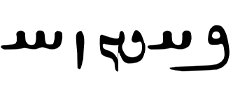

DH: dārūg ī hunsandīh | The medicine for contentment
The dārūg ī hunsandīh is a prescription for preparing the medicine of contentment.
The dārūg ī hunsandīh is a prescription for preparing the medicine of contentment.
This is a benediction pronounced in the sūr “where excellent food was served and where cooks and table boys, singers and musicians, and gate-keepers were engaged.” The text is also an example of after-meal speech at banquets and at anniversary ceremonies.
The draxt asurīg (DA) is a versified animal fable, originally composed in Parthian. The postscript to DA refers to it as a srōd ‘song, poem’ among the poems composed by an (unknown) poet; it was transmitted both orally and in writing.
The cīdag handarz ī pōryōdkēšān is a small school-book that deals with a number of subjects that every boy and girl must know before attaining the age of 15 years and being invested with the sacred girdle.
In a short treatise, in Pārsīg, from Drangiana (Sakastāna), it is said that, after Alexander’s onslaught, a few men of priestly class escaped and fled to Drangiana. There was a man, called Sēn-burzmihr, who had compiled two Liturgies from Avesta books, the Dva.yasna: One, the Yasna and Visprad (the Long Liturgy) and the Yašt and Niyāyišn (the Short Liturgy, the Xvardag Abestāg)
The Āfrīn ī myazd ‘the benediction of ritual repast’ forms a part of the Myazda ceremony different from the Yasna ceremony.
This benediction text is used as a part of the marriage service. We have both the Pārsīg and the Pāzand versions of the Text.