
PK: peymān ī kadagxvadāyīh | Marriage Contact
Raham Asha
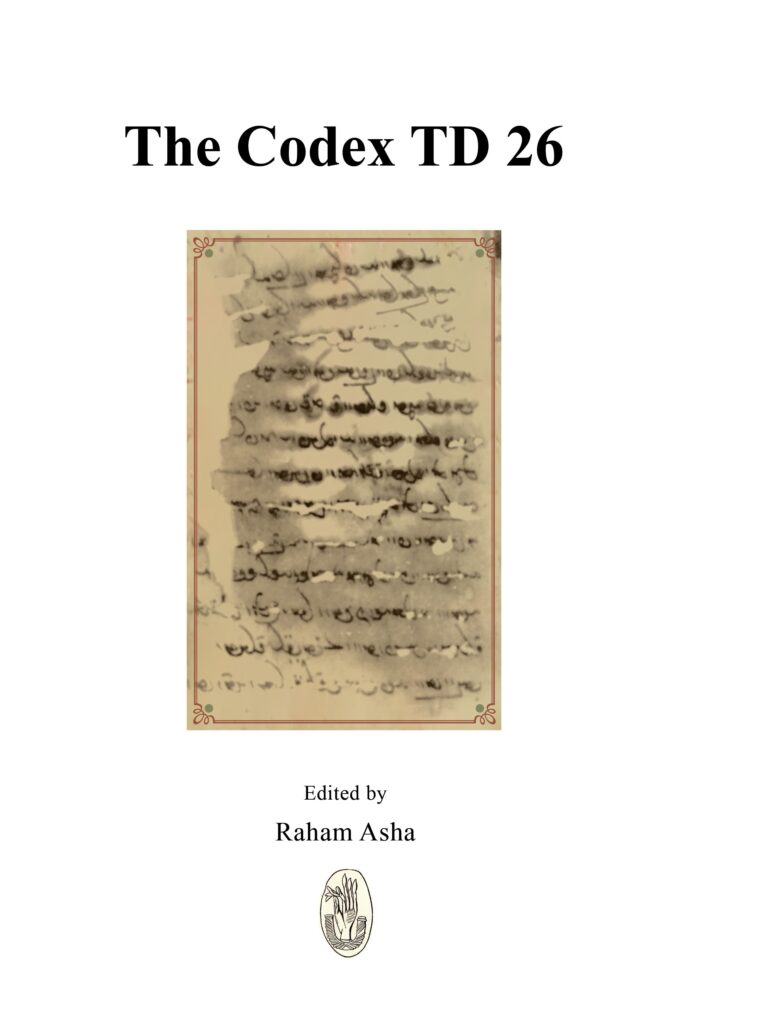
The original Pārsīg text of the peymān (and the two following Āfrīn) is not extant. In the Zand of the Short Liturgies (Xvardag Abestāg) the Pārsīg text of the solemn promises and recitals of blessings at the marriage ceremony seems to be “an attempt” at reconstructing the original text based on a Pāzand version. The last copy of that text was made in the year 767 A.Y. (/ 1397-98 A.D.). We find a Pārsīg version (called by the Parsis Āširvād Paimānī) based on the original in a number of manuscripts of the Zand ī Xvarda Avesta. It was first edited, based on two manuscripts, by Dhabhar.
pārsīg
I
<xvānend harv do mubed:> yaθā ahū vairyō (do guftan).
dahād-atān dādār Ohrmazd frāyist frazendān nar ud nabēragān frāxrōzīh, dōstīh, dilīrīh, tōm-ud-cihr-ravāgīh, dagrzīvišnīh, pāyendag sad-u-panzāh sāl.
II
[ped] rōz vahmān māh vahmān sāl (abar) haftsad-u-šast-u-haft az šāhān šāh Yazdegird ī šahriyār Sāsān-tōhm, ped šahrestān hujastag vahmān, vehān ērān hanzaman jast ēsted.
.
<pursed mubed ō pidar ī kadagxvadāy:>
abar dād ud ēvēn ī dēn ī mazdesnān ped kadagxvadāyīh zanīh duxtdahišnīh <ēn kenīg> [agar duvum bār baved ēn zan] vahmān +nām ped peymān do hazār dēnār zarr nēšābūrīg pedīrift baved?
[gōbed pid ī kadagxvadāy: pedīrift bum.]
[pursed mubed ō hān ī kenīg kū:]
tū abāg xvēš dūdmān zanīh rāy hamdādestān, ped rāstmenišnīh, ped si-gōbišnīh, xvēš-kirbag-vaxšišnīh, vahmān rāy dā <frazām ī> zīndagīh peymān bē dahed?
[gōbed pid ī kenīg: peymān bē dahem.]
[ud pursed mubed ō harv do kadagxvadāy ud kenīg:]
<ašmā> dā <frazām ī> zīndagīh peymān ped rāstmenišnīh pesann kuned?
[gōbend harv do-šān: pesann kunēm.]
[xvānend harv do mubed:]
harv do-tān rāmišn abzōn bavād! [sē bār guftan]
III
ped nām ud ayyārīh ī Ohrmazd
hamēšag xvarrahumand bēd!
hujahišn bēd!
niyāyišnumand bēd!
pērōz-amāvand bēd!
ahlāyīh nām vaxšēndār bēd!
ped burzišn sazāgvār bēd!
menišn humat menād!
gōbišn hūxt gōbād!
kunišn huvaršt kunād!
harvisp dušmat <bē> dvārād!
harvisp dužūxt bē kāhād!
harvisp dušvaršt bē ˟nasēnād!
ahlāyīh stāyād!
jādūg nikōhād!
xvahād mazdesnīh!
ped bavendagmenišnīh kār varz!
az frārōnīh xvāstag handōz!
andar xvadāyān ēkānag rāstsoxan framāngār bāš!
andar ayyārān ērdan carb hucašm bāš!
spazgīh mā kun!
xēšmen(īg)īh mā bar!
nang rāy vināh mā kun!
āzkāmagīh mā bar!
bēš mā bar…!
arešk abārōn mā bar!
abarmenišnīh mā kun!
tarmenišnīh mā bar!
varanīgīh mā bar!
xvāstag ī kasān mā appar!
[ō kadagxvadāy:]
az zan ī kasān pahrixtār bāš!
[ō kenīg:
az šūy ī kasān pahrixtār bāš!]
az hutoxšāgīh ī xvēš xvar ud yazdān ud vehān rāy bahrvar kun!
abāg kēnvar mard nibard mā kun!
abāg āzvar hambāz mā bāš!
abāg spazg hamrāh mā bāš!
abāg dusrav peyvann mā kun!
abāg dušāgāh hamkār mā bāš!
abāg dušmenān ped dādestān kōš! abāg dōstān <ped> pesann ī dōstān rav!
abāg viyābān pehikār mā kun!
ped hanzaman bōxtguftār bāš!
pēš pādixšāyān peymānsoxan bāš!
az pidar nāmburdār bāš!
ped harv (×ēc) ēvēnag mād mā āzār!
xvēštan ped rāstīh bōxtag dār;
cōn Kay-Husrav ahōštan bēd!
cōn Kayus āgāhīhumand bēd!
cōn Xvaršēd rayumand bēd!
cōn Māh baxtār bēd!
cōn Zardušt nāmdār bēd!
cōn Rustahm zōrāvar bēd!
cōn Spendārmed zamīg badrār (/bardahišn) bēd!
cōn tan gyān abāg dōstān ud brādarān [ō kadagxvadāy] ud zan [ō kenīg: ud šūy] ud frazendān hu-dōstdār (/hudastyār) bēd!
hamēšag hudēn ī huxēm b(av)ēd!
Ohrmazd xvadāy šnāyēnēd! Zardušt rad stāyēd!
Ahrmen dēv abestāyēd!
IV
dahād dahišnīh Ohrmazd!
menišnīg-menīdārīh Vahman!
huguftārīh Ardevahišt!
hukirdārīh Šahrever!
purmenišnīh Spendārmed!
šīrēnīh ud carbīh Hurdād!
barumandīh Amurdād!
dahād dahišnīh dādār Ohrmazd!
rāy vaxšan Ādur!
pādyābīh Ardvīsūr!
šāhīg sarabrāzīh Xvaršēd!
Māh Gōzihr vaxšan!
Tīr rādīh ravāgīh!
Gōš pahrixtārīh veh!
dahād dahišnīh dādār Ohrmazd!
Mihr yazd hunišnīh!
Srōš framānpānāgīh!
Rašn rāstravišnīh!
nērōg ī rōyišnīh Fravardīn!
Vahrām pērōzīhhandāxtārīh!
Rām rāmišn xvāstar!
arvand tuvānīgīh Vād!
dahād dahišnīh dādār Ohrmazd!
Dēn dānišnabrōzīh!
xvarrahhandōzīh Aršišvang!
hunarhambārišnīh Aštād!
abēr toxšāgīh Asmān!
gāh-pāyendagīh (/gāh-pādagīh) Zamyād!
hunigerišnīh Mānsrspend!
pard (frayād??) Anērān!
V
vaŋhu tū tē vaŋhaot̰ vaŋ́hō buyāt̰ hvāvōya yat̰ zaoθre hanaeša tū tūm tat̰ mīždǝm yat̰ zaota hanayamnō ā̊ŋha frāyō.humatō frāyō.hūxtō frāyō.hvarštō
jamyāt̰ vō vaŋhaot̰ vaŋ́hō
mā vō jamyāt̰ akāt̰ aśyō
mā mē jamyāt̰ akāt̰ aśyō
ā airyə̄mā išyō rafǝδrāi jaṇtū
nǝrǝbyascā nāiribyascā zaraθuštrahē
vaŋhə̄uš rafǝδrāi manaŋhō yā daēnā vairīm hanāt̰ mīždǝm
aṣahyā yāsā aṣīm yąm išyąm ahurō masatā mazdā̊
ahmāi raēšca xvarǝnasca ahmāi tanvō drvatātǝm
ahmāi tanvō vazdvarǝ ahmāi tanvō vǝrǝθrǝm
ahmāi īštīm pouruš.xvāθrąm ahmāi āsnąmcit̰ frazaiṇtīm
ahmāi darǝγąm darǝγō.jītīm
ahmāi vahištǝm ahūm aṣaonąm raocaŋhǝm vīspō.xvāθrǝm
aθa jamyāt̰ yaθa āfrīnāmi
VI : āfrīn ī vazurgān
ped nām ī yazdān
āfrīn cōn pēšgāh ī xvadāy ped hukird būm ped Ērānšahr (vahmān).
kāmaghanzām bēd cōn Ohrmazd xvadāy ped dāmān ī xvēš!
farrox ud pahlum(dar) bēd cōn Kay-Husrav!
xūbmihr bēd cōn Mihr yazd!
dušmenzadār bēd cōn Zarēr!
hudīd(ag) bēd cōn Syāvaxš!
bāmīg bēd cōn Vēzan!
ahlav bēd cōn Guštāsp šāh!
zōrumand bēd cōn Sām ī Nerīmān!
āznāvar bēd cōn Rustahm!
nēzagvar bēd cōn Spendyād!
kundāg bēd cōn Jāmāsp bidaxš!
cēr ud abarvēz bēd cōn Ardā-Fravard!
rād bēd cōn Tištar!
carb bēd cōn Vārān!
vēnāg bēd cōn Xvaršēd!
vaskirbag bēd cōn Zardušt!
dagrzīvišn bēd cōn Zurvān pādixšāy!
barumand bēd cōn Spendārmed zamīg!
vaspeyvann bēd cōn rōd ī nāydāg!
vashambār bēd cōn zimestān!
huram bēd cōn vahār!
hubōy bēd cōn mušk!
abāyišnīg bēd cōn zarr!
ravāg bēd cōn dram!
kirdār bēd cōn Ohrmazd xvadāy ped dāmān ī xvēš!
ēn āfrīn ped ašmāh ēdōn bād cōn māh ud xvaršēd ud āb ud ādur ud may ud murd ud mušk ud jāsmin ud gul ud marzangōš.
[vahmān (kadag-xvadāy) rāy ud vahmān (kenīg) rāy] hazār sāl [zīndagīh bād] abāg bannagān ī xvēš.
mastīh kunēd ped xvarišn pāk, may xvaš, ud sprahm hubōy abāg zan [/šūy] ī xvēš.
niyūšāg (/nēk) nar ī ahlav frazend zāyed kē ērān dārād ud nām xvāhād (/barād) ud dušmen ōzanād ud dūdag abrōzād.
drūd
English
I [: Preliminary blessings]
<Two priests recite together> the sacred formula Ahunvar (twice).
May Ahura Mazdā the creator grant you, most of all, sons and grandsons, abundance of comforts and conveniences of life, friendship, courage, propagation of family and race, longevity that lasts for a hundred and fifty years.
II [: The Contract]
On the day such and such, of the month such and such in the year 767 (/1398 A.D.) of the king of kings Yazdegird, son of Šahriyār, a descendant of Sāsān, in the auspicious city such and such, an assembly of the Good Aryans was held.
[Questions to the parties]
<The (senior) priest asks the father of the bridegroom:>
Do you accept this maiden [if it be her second time, this woman] by name such and such, to be given in marriage, in accordance with the law and tradition of the Daēnā Māzdayasni, by the commitment (of paying) 2000 gold dēnāria of Nēšābūr?
[The father of the bridegroom replies: I give (a formal) promise!]
[The (senior) priest asks the father of the bride thus:]
Do you and your family, unanimously, wholeheartedly, by a triple utterance, and for the increase of your meritorious works, give promise of marriage up to the end (of her) life?
[The father of the bride replies: We give (a formal) promise!]
[The priest asks both the bridegroom and the bride thus:]
Do you, wholeheartedly, give your assent (to enter into) the contract (of marriage) up to the end of (your) life?
[Both of them reply: We give our assent.]
[Then both the priests recite:]
May the gaiety (/merriment) of ye both become progressively greater! [To be said three time]
III [: The admonition and benediction]
[Joint addresses by both the officiating priests:]
In the name and with the help of Ahura Mazdā
May you be ever fortunate!
May you be blessed with good luck!
May you be worthy of praise!
May you be victorious and strong!
May you increase Aṣa (‘truth; order’) and fame!
May you deserve esteem!
May (your) mind think well-thought thought!
May (your organ of) speech speak well-spoken word!
May (your power of) doing do well-done deed!
May all evil-thought thoughts get lost!
May all evil-spoken words dwindle!
May all evil-done deeds perish!
May righteousness be praised!
May sorcery be blamed!
May the Mazdeism (/the Mazdayasnian vision) be well-studied!
Do deeds with appropriate thinking (/with a perfect gesture of respect)!
Acquire wealth honestly (in a regular manner)!
Unto sovereigns (/lords), be loyal, and veracious and obedient!
Unto friends (/help-mates), be humble, and gentle, and benevolent!
Do not slander (anybody)!
Do not be filled with wrath!
Do not commit any sin through shame!
Do not be marked by greed (/Do not entertain a covetous desire)!
Do not experience sorrow (/Do not bear hostility to any one)!
Do not bear wrong (/immoral) envy!
Do not show an attitude of haughtiness (/ an attitude of superiority and contempt for people)!
Do not show contempt (for people)!
Do not commit lasciviousness!
Do not extort other person’s property!
[Addressing the bridegroom:]
Refrain (/Be an abstainer) from the wives of others!
[Addressing the bride:
Refrain from the husbands of others!]
Eat of your own genuine effort, and share it with the deities and the good!
Do not wrangle with a vindictive person!
Do not be a partner with a covetous man!
Do not be a travelling companion with a slanderer!
Do not form (any type of) relationship with an ill-famed man!
Do not be a co-worker with an ignorant person!
With enemies, struggle in harmony with the law!
With friends, proceed with the approval of friends!
Do not dispute with a person who goes astray!
At a meeting, be a convincing-speaker!
Before sovereigns, speak with measure!
Carry the name of your father!
Do not in any way torment your mother!
Preserve yourself (or, keep yourself safe) by means of truth!
Be an immortal person like Kavi Haosravah!
Be endowed with knowledge like Kavi Usan!
Be opulent (/brilliant) like Sun!
Be a distributor (of good gifts) like Moon!
Be illustrious like Zaraθuštra!
Be strong like Rustam (Raotastaxman)!
Be productive like the earth Spǝṇtā Ārmaiti!
Be good and friendly (/a good helper) towards your friends, brethren, [addressing the bridegroom:] wife, [addressing the bride: husband], and children, as the body is as regards the breathing soul!
Always be of good (Mazdayasnian) religion and of good ethos!
Acclaim (or, recognize) the (divine) lord Ahura Mazdā!
Praise the (divine) judge Zaraθuštra!
Refuse to praise the evil god Aŋra Mainyu!
IV [: Invocation of the divine entities]
May Ahura Mazdā grant the creation (of good creatures)!
Vohu Manah the thinking of (good) thoughts!
Aṣa Vahišta the utterance of good (words)!
Xšaθra Vairya the performance of good deeds!
Spǝṇtā Ārmaiti perfect-mindedness!
Haurvatāt sweetness (/the milk libation) and smoothness (/the fat libation)!
and Amǝrǝtatāt fruitfulness!
May Ahura Mazdā the creator grant the creation!
Ātar the growth of wealth!
Arǝdvī Sŭrā (Anāhitā) the ritual purity!
Hvarǝxšaēta the royal eminence!
Māh Gaociθra the growth (of plants)!
Tištrya the advancement of generosity!
[On the day] Gə̄uš (Urvan) abstention (from meat eating) is good!
May Ahura Mazdā the creator grant the creation!
The deity Miθra the pressing (of Haoma)!
Sraoša the maintaining of commands!
Rašnu the truthfulness (of judgements)!
[On the day of the holy] Fravaṣinąm the power of growth (in the world of life)!
Vǝrǝθraγna the preparation of victory!
Rāman the peace and good pasture!
Vāta the swiftness (of horses) and the strength (of men)!
May Ahura Mazdā the creator grant the creation!
Daēnā the enlightenment of knowledge!
Aṣiš Vaŋvhi the earning of fortune!
Arštāt the store of virtues!
Ašn (/Asman) the tremendous effort!
Ząm Huδā̊ŋhǝm the stability of places!
Mąθra Spǝṇta the good observation!
[On the day of] Anaγranąm [Raocaŋhąm] the ˟assistance!
V [: Avesta benedictions]
[Y 59.30] May (what is) good, (what is) better than good, be for you in person, you the libator (zaotar), with more good thoughts, with more good words, with more good deeds, may deserve the prize that the libator has deserved.
[Y 59.31] May (what is) better than good come to you.
May not (what is) worse than bad come to you.
May not (what is) worse than bad come to me.
[Y 54.1] Let Airyaman išya come to the support
of men and women, to the support of good thought of Zaraθuštra, by which his daēnā will deserve a desirable prize.
I ask for the išya reward of truth which Ahura Mazdā has conferred.
[Y 68.11] (Give) to him wealth and Fortune, to him health of the body,
to him firmness of the body, to him immunity of the body,
to him the possession that offers much comfort, to him offspring of his own,
to him long longevity,
to him the Best Existence of the Aṣavan, illustrious, with all comfort.
[Srōš Vāz 5. End of benedictions] May It come about so as I say the blessing.
VI : The Blessings of the Great Ones
In the name of the Yazata
Benediction text as one (should utter) before the Lord, benediction text (we recite) in (this) well-made country, in Ērānšahr, (in such and such a district/city).
Be ye successful like the lord Ahura Mazdā with regard to His creations!
Be ye fortunate and best (/the best of men) like Kavi Haosravah!
Be ye true to your covenant like Miθra the Yazata!
Be ye a smiter of enemies like Zairi.vairi!
Be ye handsome like Syāvaršan!
Be ye radiant like Vaijana!
Be ye saint (after death) like Vištāspa the king!
Be ye robust like Sāma of heroic heart!
Be ye noble like Raotastaxman!
Be ye a lancer like Spəņtōδāta!
Be ye a seer like the viceroy Jāmāspa!
Be ye triumphant and victorious like the Fravaṣi of the Truthful!
Be ye liberal like Tištrya!
Be ye mild like the rains!
Be ye clear like the sun!
Be ye of many meritorious deeds (in your stock) like Zaraθuštra!
Be ye long-lived like the sovereign Zruvan!
Be ye fertile like the earth Spəņtā Ārmaiti!
Be ye with many relatives like a deep (navigable) river!
Be ye rich in stores like winter!
Be ye merry like spring!
Be ye fragrant like musk!
Be ye desirable like gold!
Be ye current (in the world) like silver (coins)!
Be ye active (in ceremonial acts) like the Lord Ahura Mazdā for His own creations!
May these benedictions be unto you as Moon and Sun, water and fire, wine and myrtle, musk and jasmine, rose and marjoram!
Unto N1 (the bridegroom) and unto N4 (the bride) may there be a thousand years of life, together with your relatives!
May you be intoxicated through pure food, sweet wine, and sweet-smelling herb, with your wife (husband)!
May there be born a truthful man (/hero), who may protect Ērān, who may seek fame (/may be renowned), who may smite the enemies, and who may illuminate the family (/have offspring)!
Peace (/health).